


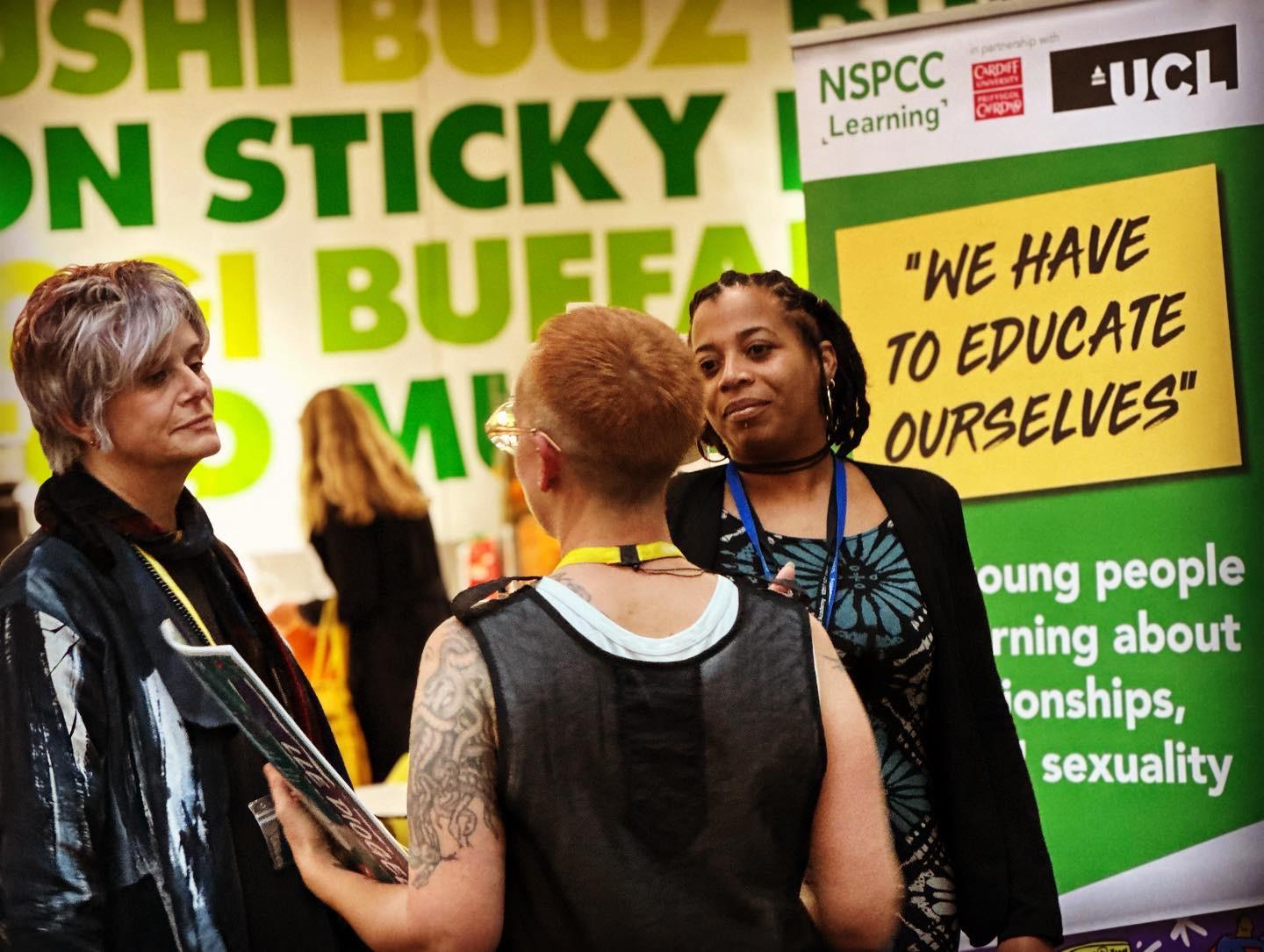
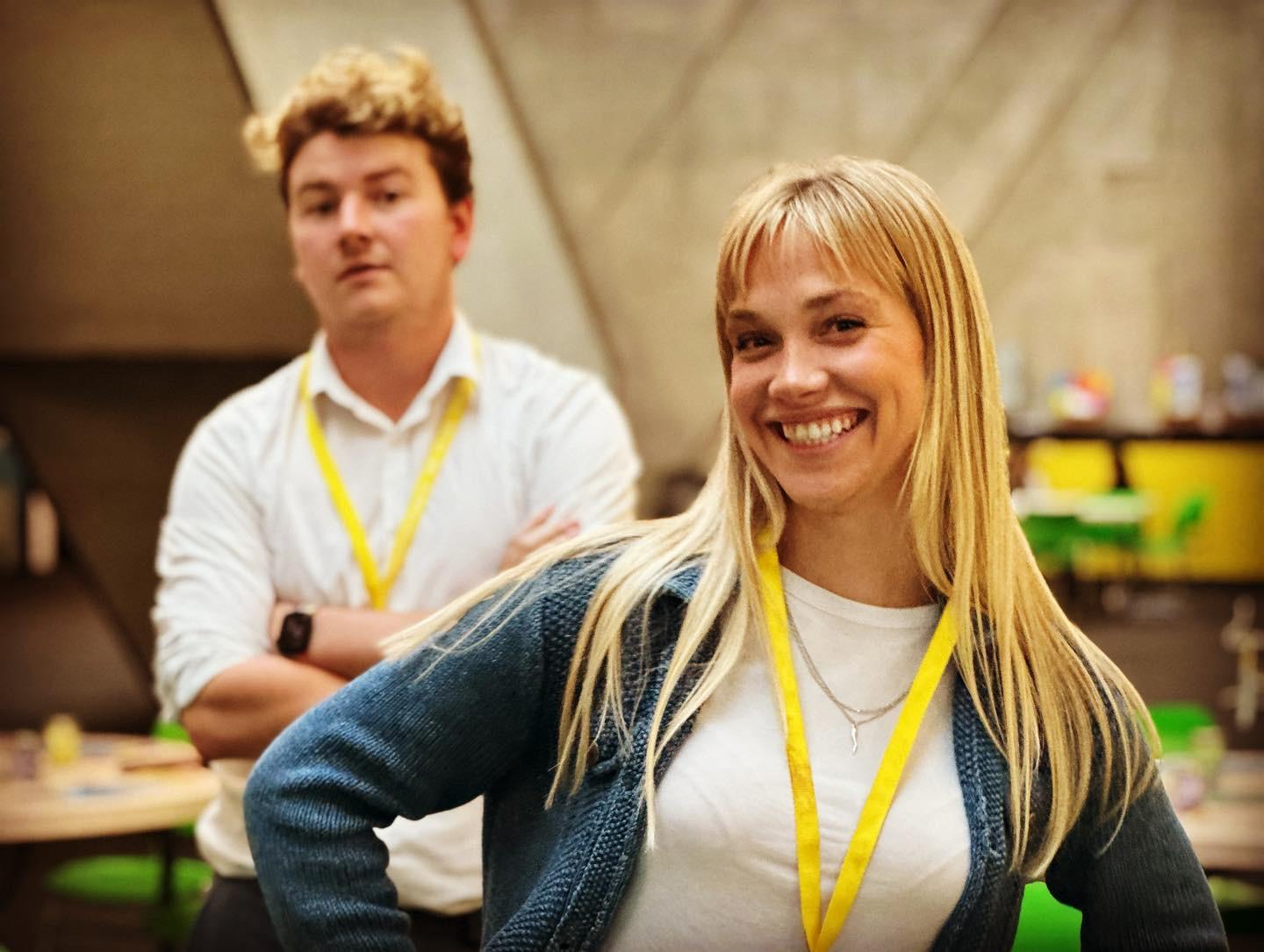
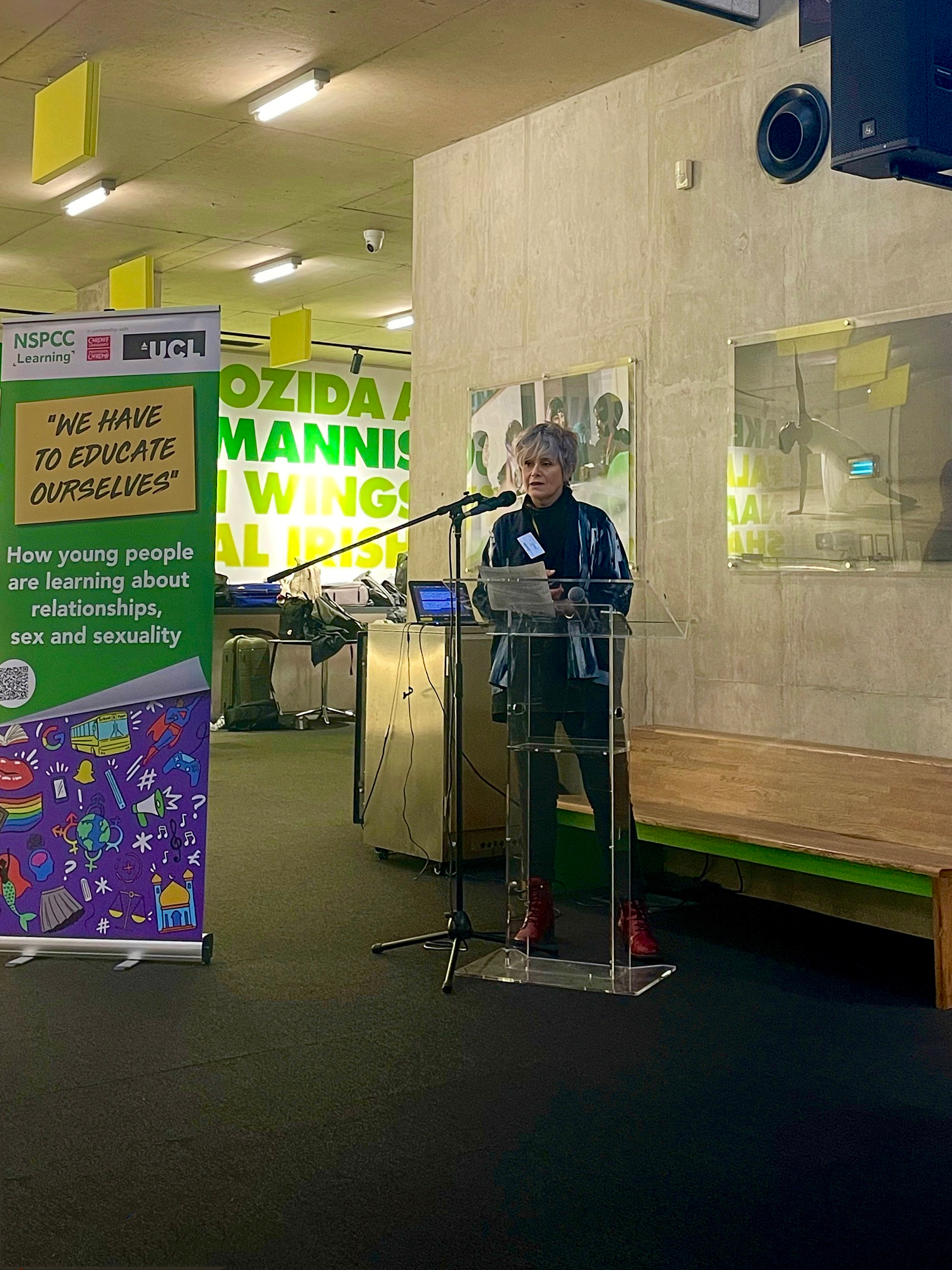
Following the publication of NSPCC-commissioned research “We have to educate ourselves”: prioritising young people’s voices and their recommendations for change, our FEELer Betsy Milne, Prof. Jessica Ringrose and Dr. Sara Bragg, joining the project leader Prof. EJ Renold, have shared this new research with secondary school teachers and RSE providers at Westminster Academy in London on October 5, 2023. Drawing on creative and exploratory approaches, this research listened to the views and experiences of young people aged 11 to 18 from across England, Wales and Scotland, about how and where they acquire knowledge and seek support, as well as what young people feel essential to be learnt concerning relationships, sex and sexuality. This blog recapitulates the key findings presented at the event and is hoping to get more stakeholders involved.

How we listened to young people using creative methods
- Support Clouds
Young people wrote down who they would go to if they needed advice or support and what would make the interview a safe and comfy space to talk about relationships, sex and sexuality education (RSE).
- Image-ining
Young people explored a selection of 20 images and chose ones that they wanted to talk or write about.
- Mapping
Young people talked about how different places shape what and how they are learning about relationships, sex and sexuality. They could reflect on their own experiences and/or create a fictional character, using a pipe-cleaner, to share their views.
- Designing
Young people designed their own ideal RSE curriculum using emojis, heart stickers, stones and paper rulers. They identified what they would love to learn about, how they feel about RSE, what would be heavy to learn about and what rules need to change so that the ideal could become a reality.
- What Jars Us?
Young people wrote down what jars them most about relationships, sex and sexuality.
- Reflections
Young people reflected on the sessions by writing on post-its and placing them in a silver pouch or by using silver foil to make a shape that expressed how they felt about taking part.
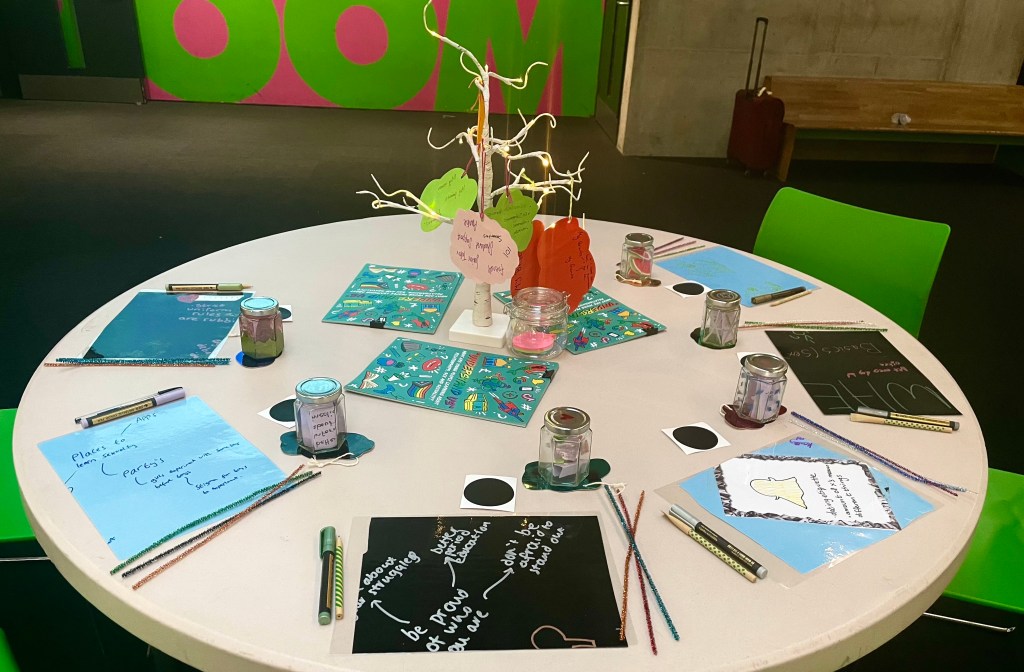
Some of the creative activities were also introduced to the teachers and RSE providers, and we are delighted to have received their valuable insights into RSE.
Join us with your support clouds!
Share your thoughts and feelings about the support you need to provide RSE by hanging your “clouds” on the “tree”.
You can also watch the 10-minute video “More like this” to explore how these creative and participatory methods can be used in RSE lessons.
What we found out
Relationships and sex, and sexuality education in schools is “sketchy”, but young people would still “rather learn it in school because it’s accessible to everyone”.
Many young people describe their school RSE experiences as too little, too late, negative, ineffective, in some cases counterproductive, embarrassing, awkward and irrelevant to their everyday lives. They identify as particularly inadequate the teaching of periods, sexual and gender identity, sex, masturbation, pleasure (especially female pleasure), and the failure to be LGBTQ+ inclusive. Teaching methods are often seen as lacking as well. Young people describe wanting lessons to be interactive and to include more discussion and conversation in small friendship groups.
Young people learn about relationships, sex and sexuality “from socialising” in school, online and in their communities. Close friends are vital for learning and support.
Young people describe learning from each other and in response to their gaps in knowledge. This ranges from giving “relationship advice”, learning about sex, pleasure and masturbation, to helping each other make sense of gender and sexual identities and diversity. They also describe a range of spaces in school and their local communities where they get together and learn from each other. This includes school-based LGBTQ+ clubs, feminist groups and wellbeing rooms, youth centres, and sexual health centres.
Young people learn about relationships, sex and sexuality through their families, but many find this can be “awkward” and unhelpful.”
Young people find conversations and support most useful and empowering when connected to shared values or experiences, but these experiences are often gendered, with mothers, aunts, sisters, and grandmothers being the most sought-after sources. Fathers are sometimes seen as ill-equipped due to their perceived humour-driven approach. Unexpectedly imposed advice or support is generally unwelcome.
Young people want to learn more about relationship, gender and sexual diversity because “as more people learn/find out about sexualities, more people need to understand them and what they mean”.
Young people in all groups want to learn more about gender and sexual diversity and the changing social world around them, about their own and others’ relationships and sexual experiences (e.g. about sexual intimacy, desire, consent, pressure, jealousy, trust and shame). However, there are few opportunities to share their views and experiences with trusted adults.
Young people feel that “gender and sexual norms”, “discrimination” and “harassment” negatively affect people’s lives. They are clear that “this stuff shouldn’t be happening” and are speaking out about the changes they want to see.
Young people are troubled by how gender and sexual norms interact and negatively affect their lives and the lives of others, and in uneven and unequal ways. Gender and sexual violence, both online and offline, is described by young people as commonplace, and all forms of gender and sexual violence, from gender-based insults to sexual assaults, are under-reported or not reported at all. Many young people wanted staff to be more proactive and responsive in how they were supporting and educating young people in this area.
Young people are using social media, search engines, websites, films, TV series and books to learn about relationships, sex and sexuality: “some of it’s good, some of it’s not so good!”
Young people describe accessing widespread ‘misinformation’ online about relationships, sex and sexuality and how they are learning to differentiate between more and less valuable and reliable sources of information. They explain that they still enjoy going online for a variety of reasons but that they want strategies to avoid or prevent the circulation of ‘misinformation’.

“Listen to us”: Young people’s recommendations for change
Young people want RSE…
- Care and compassion
Young people want teachers, parents, trusted adults and peers to show care and compassion for their diverse experiences, be more open-minded, stand up for equity and challenge discrimination.
- Comfortable and confident
Young people want RSE providers to be comfortable and confident in what and how they educate. They want “trusted” adults to carry out confidentiality protocols and safeguarding in a way that puts their wishes and well-being first.
- Connected and comprehensive
Young people want the RSE curriculum to be more comprehensive and more closely connected to their own lives and the real-world experiences of others, and it must cover areas of sexual and gender identities and LGBTQ+ lives, relationships, periods, sex, mental health, and sexual harassment and violence.
- Co-constructed and creative
Young people want to be active participants in building a creative learning environment with each other and their RSE providers. They want to be “listened to” and consulted on what and how they would like to learn and access support in these areas. They would like to experience more of the creative methods and participatory approaches, which enable them to feel, think, question, and share sensitive issues at their own pace and in their own way.
Reflective activity
“Thematic Topics Cards” is a suite of illustrated cards to help educators learn about the diversity of learning and experience on key topics within relationships, sex and sexuality education, in young people’s own words from the research. Here we offer a chance to re-Imag(e)ining RSE and resonate with young people with these cards.
Pick one card, look at the images and guess what the RSE topic might be. Then turn the card over to find out. (Note: figures and quotes have the same outline or background colour are corresponded)


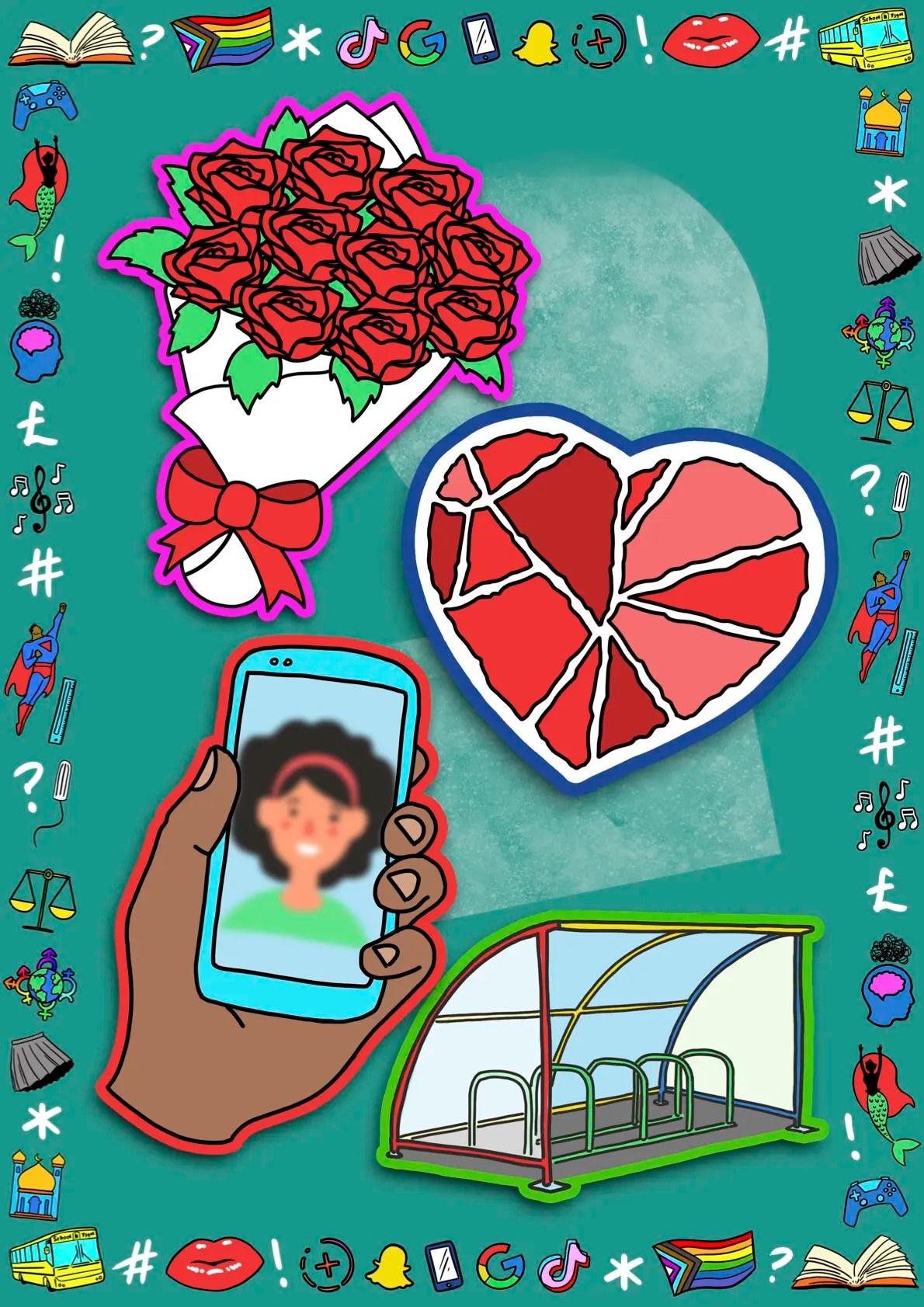


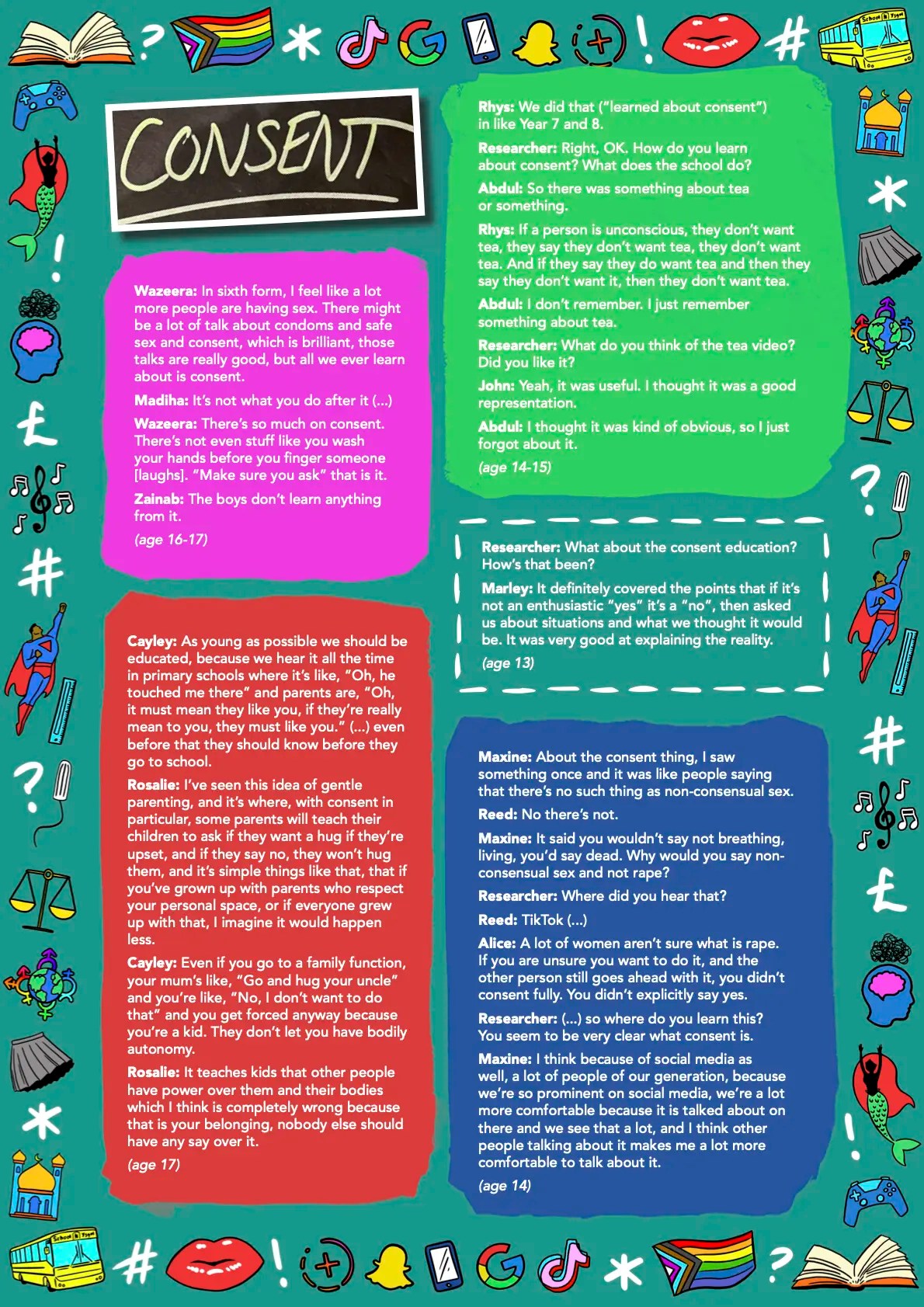

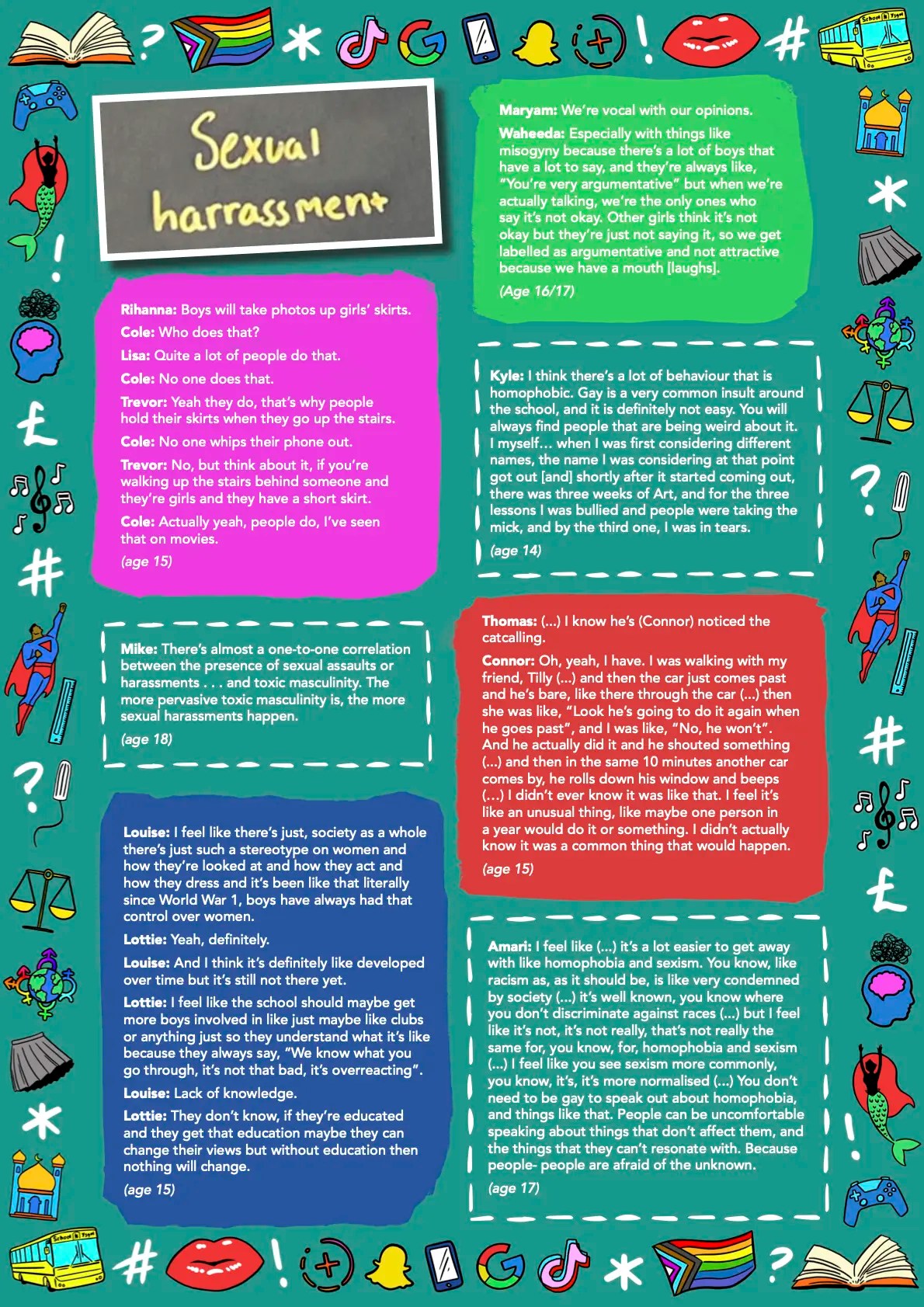
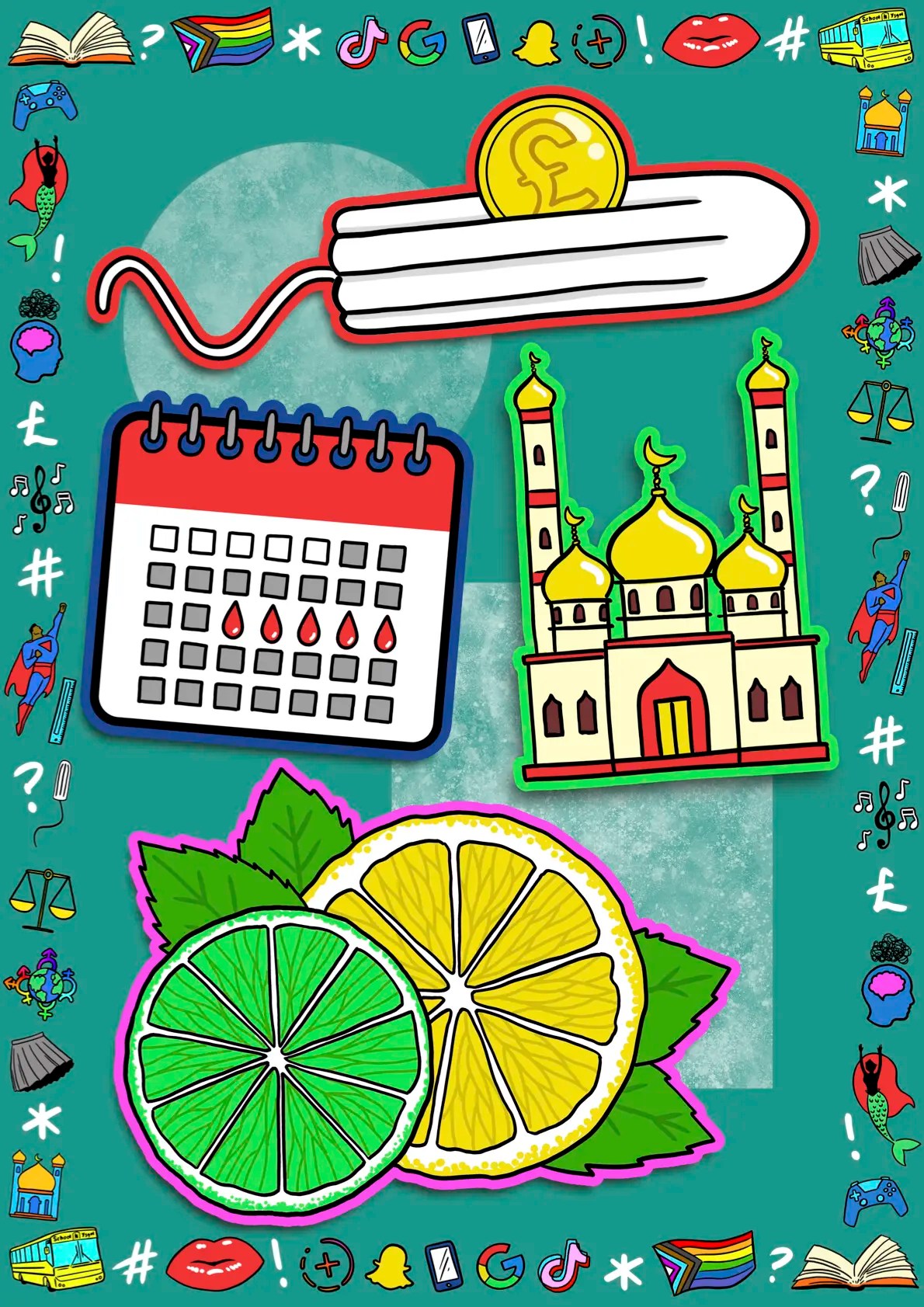

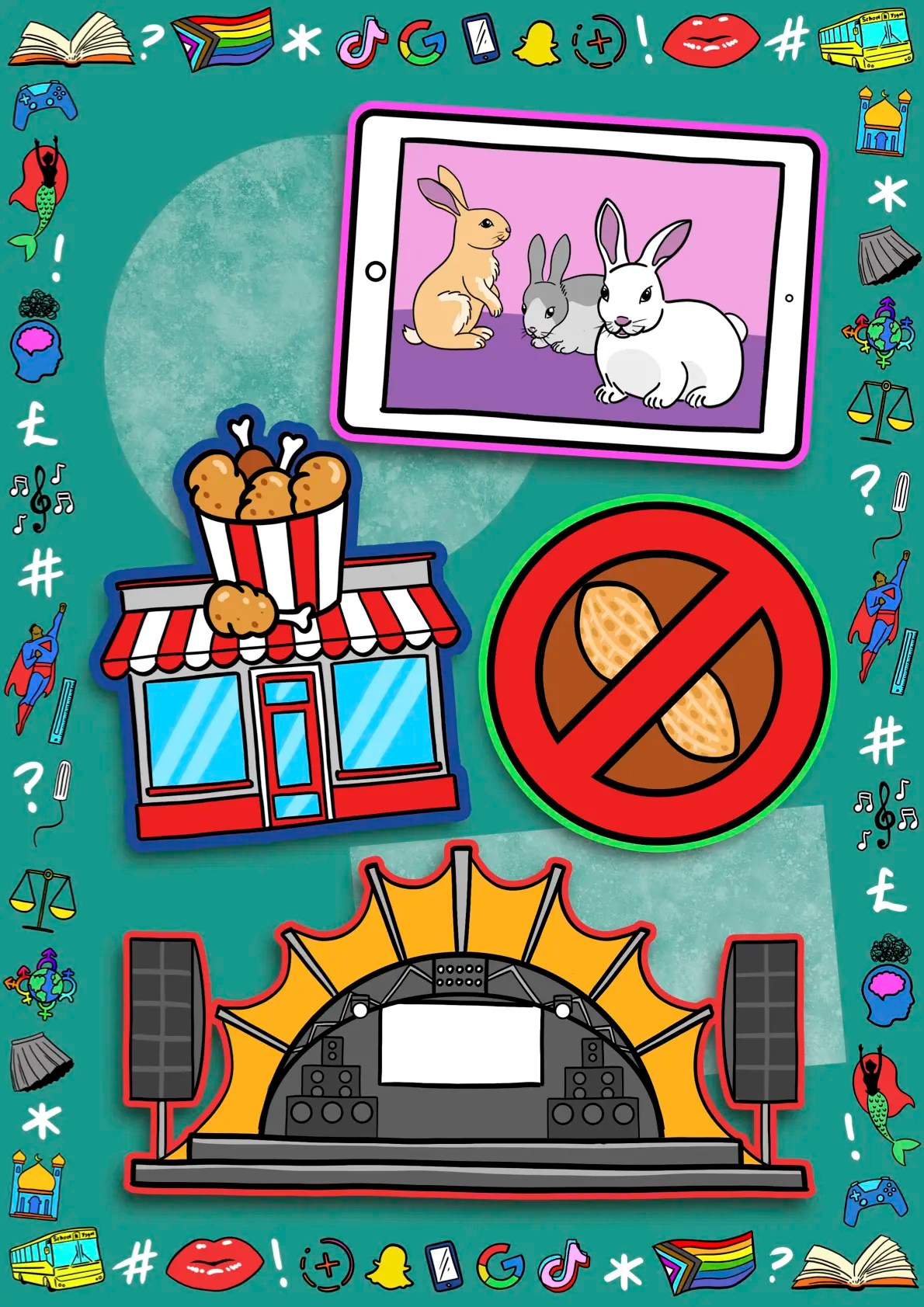
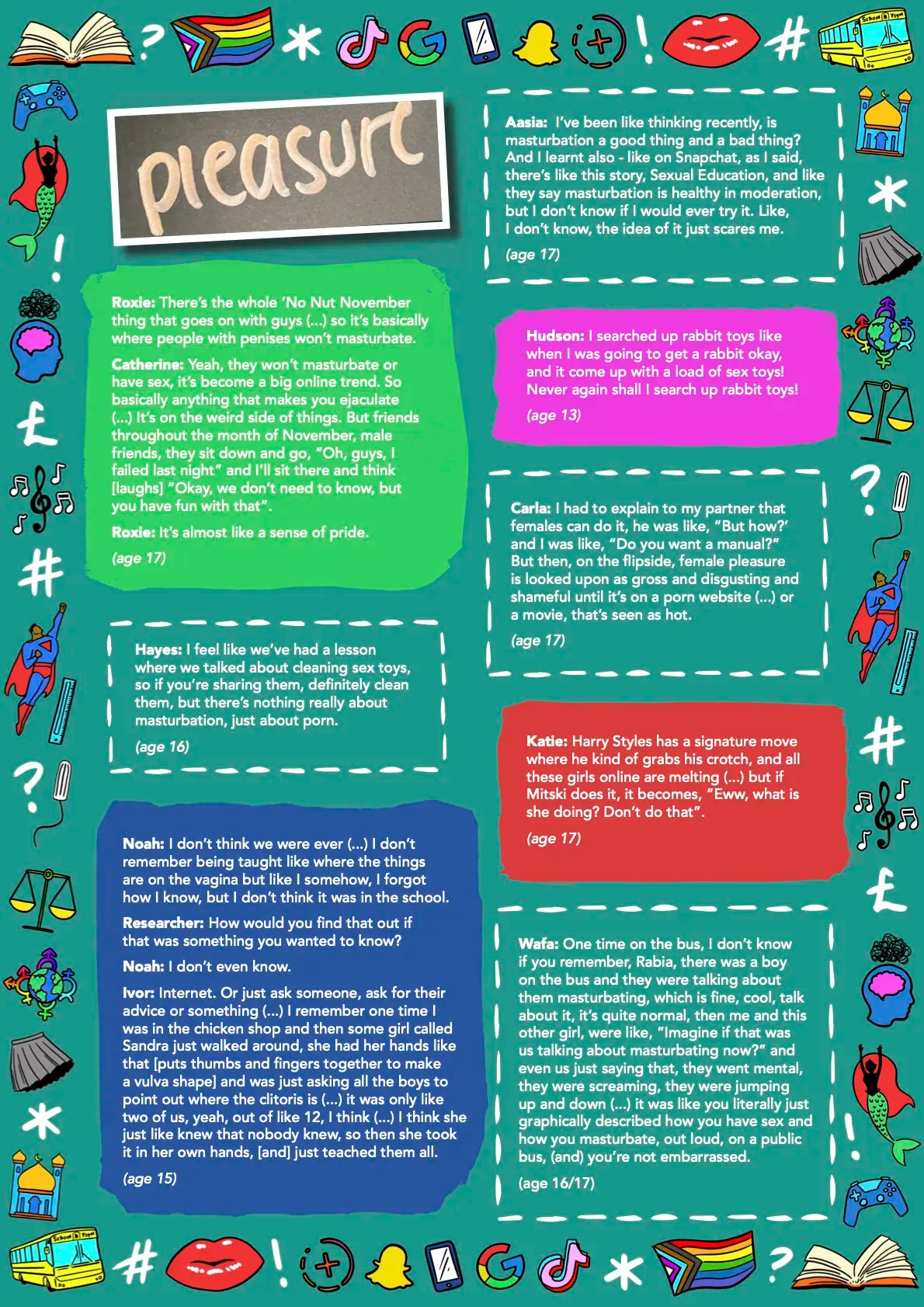
Ask: Are you surprised when you turn over the card?
Consider: How far do the quotations from young people resonate with your own views or assumptions about how they are learning about relationships, sex and sexuality?
Reflect: How do you feel about what you have read? What more do you want to know?
Don’t forget to share your thoughts with us! Your contributions to RSE will be highly appreciated.
To access the full report and all sets of thematic topics cards, please visit: https://learning.nspcc.org.uk/research-resources/2023/how-young-people-are-learning-about-relationships-sex-sexuality
Blog author: Sitian Chen
 Feminist Educational Engagement Lab
Leave a comment