

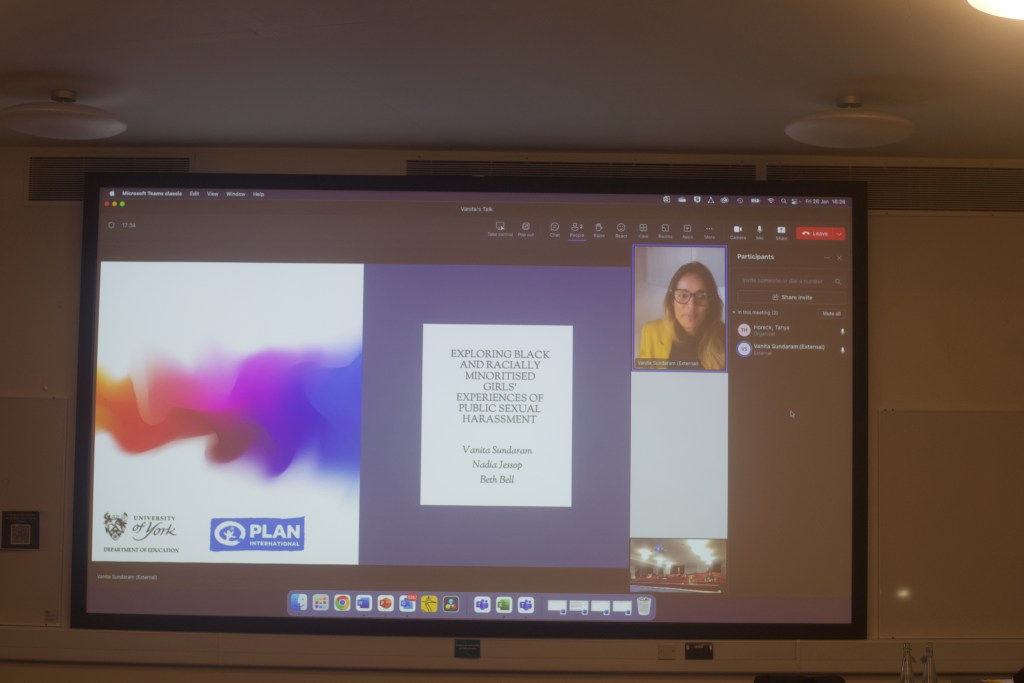
In the Invited Speakers Panel 2, it was a pleasure to welcome Professor Vanita Sundaram to share her research on black and racially minoritised girls’ experiences of public sexual harassment. In her research, she particularly looked at how these experiences differ from those of white girls, the barriers these girls face in disclosing and reporting public sexual harassment and their views on solutions to prevent public sexual harassment.
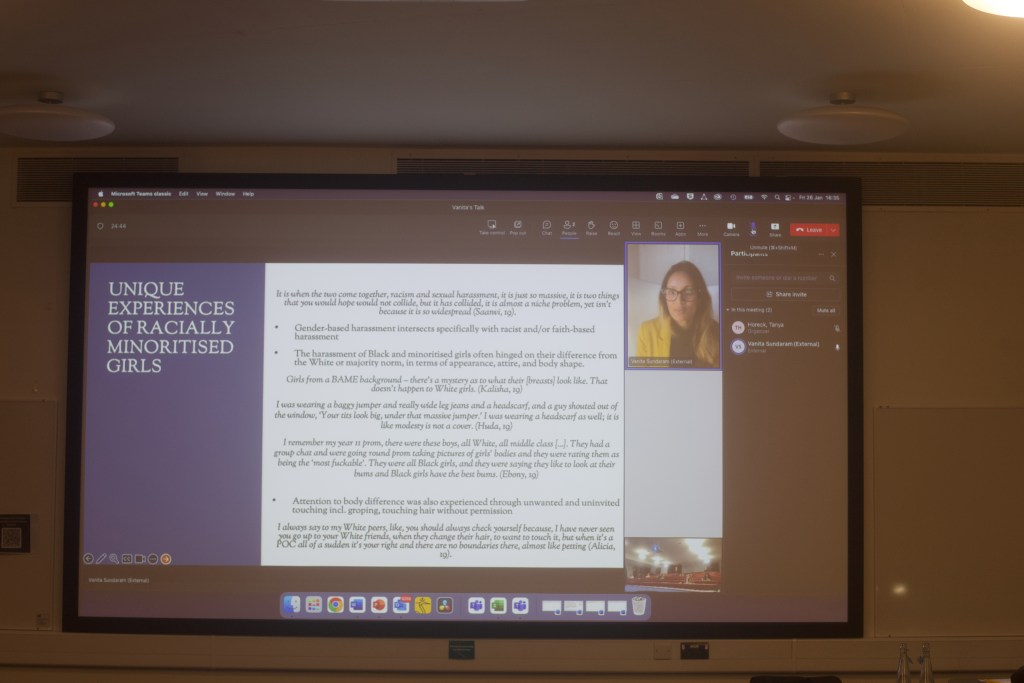
The findings indicate that Black and racially minoritised girls are more vulnerable to sexual harassment, facing specific challenges such as being unfairly held responsible for harassment, and their racialised difference from the majority norm, either in terms of their appearance or the development of their bodies, what they wore and so on.
In terms of barriers to disclosure to authorities like the police and barriers to disclosure within schools, lack of trust in the police due to perceived racism and stereotyping, coupled with a fear of stigma in their communities, hinders reporting public sexual harassment. Within schools, teachers’ dismissive attitudes, victim-blaming, and a lack of understanding of the cultural context contribute to girls feeling unsafe disclosing public sexual harassment.
Recommendations include:
- Challenge gender norms and expectations around masculinity and femininity that sustain sexual harassment and violence.
- Improve education targeted at boys.
- Improve education for teachers and other adults in authority positions to challenge gender stereotypes and victim-blaming, and to improve reporting mechanisms.
- RSHE should include content about body diversity, cultural norms around sexuality, and intersecting inequalities.
- Improve reporting processes and systems for survivors.
- Create more safe spaces for girls and young women in schools and universities to share their experiences and seek support for disclosure/reporting.
- Work with members of minoritised ethnic and religious communities to talk with school-aged pupils about the importance of respect, consent, boundaries, and the impact of sexual harassment.
In the Q&A section, Professor Sundaram discussed the challenges of accessing younger age groups for the study, as schools and parents are acting like strong gatekeepers. She also elaborated more on how the young women internalised and made sense of their experiences. The participants were protective of racially minoritised young men, avoiding reporting to prevent them from getting into trouble due to over-policing and punishment. The young women were also affected by normalised victim-blaming within families, where certain behaviours were dismissed as compliments rather than recognised as harassment. This indicates another way in which they internalised racism in a social means, and intersected with shame and stigma around those experiences as well.
Blog author: Sitian Chen
 Feminist Educational Engagement Lab