

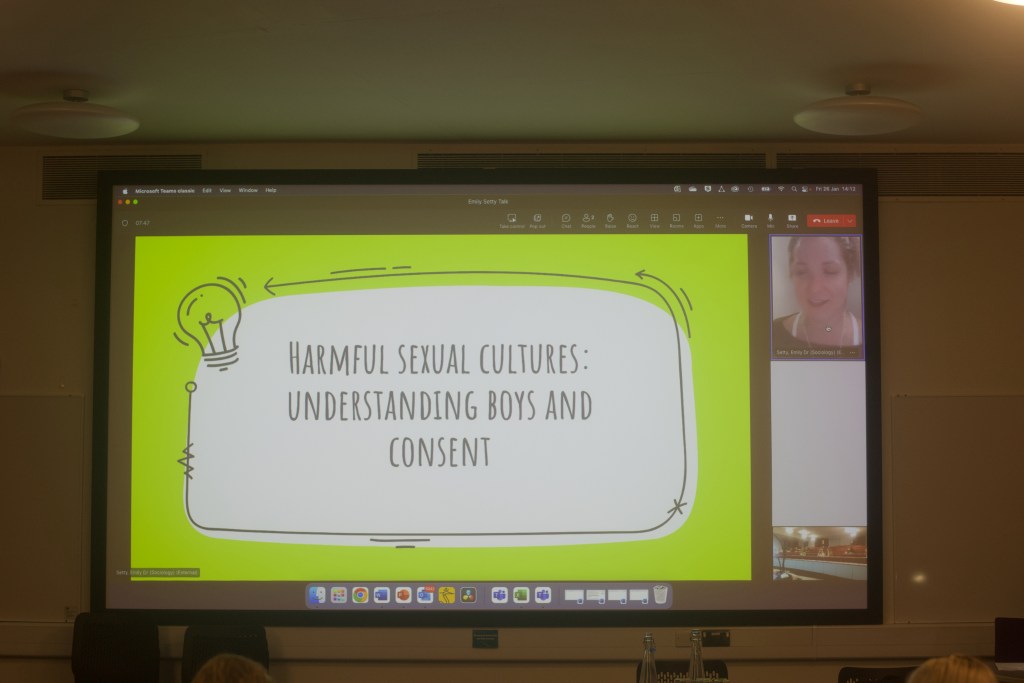
Dr Emily Setty has been doing some research with teenage boys about some of their perspectives on complex topics, particularly around sex and consent. In this presentation, she foregrounded the disparity between theoretical understanding and real-world experiences about sex consent.
One of the prominent themes about the boys’ internalization of social norms is that they are the primary initiators in sexual encounters. They express the need to double-check a girl’s genuine consent even if she initiates the interaction. This binary understanding reveals the struggle between the boys’ desire for mutual, equal relationships and the societal pressure to conform to traditional gender dynamics.
Another theme is the boys’ concerns about accidental harm in the realm of consent, emphasizing the perceived challenges of navigating the grey areas, particularly in heterosexual encounters. Their reliance on non-verbal cues and a sense of “vibe” as indicators of consent reflects a desire for a more nuanced understanding of consent beyond strict legalistic frameworks.
The boys also voice concerns about false accusations, demonstrating a sense of vulnerability and insecurity in navigating the complexities of sexual encounters. These fears might stem from a lack of understanding of the legal process and a skewed perception that girls are more likely to be believed.
Dr Setty further underlined how the digital culture complicates these gender dynamics, where various non-consensual sexual behaviours, such as nude image sharing, occur. It is noted that boys also navigate precarious reward pathways, facing risks such as potential shame, catfishing, or having private images shared without consent in the digital context. The existing masculinity hierarchy contributes to oppressive power structures, creating risks and rewards that affect boys, even when there is an opportunity in an abstract for exploitation.
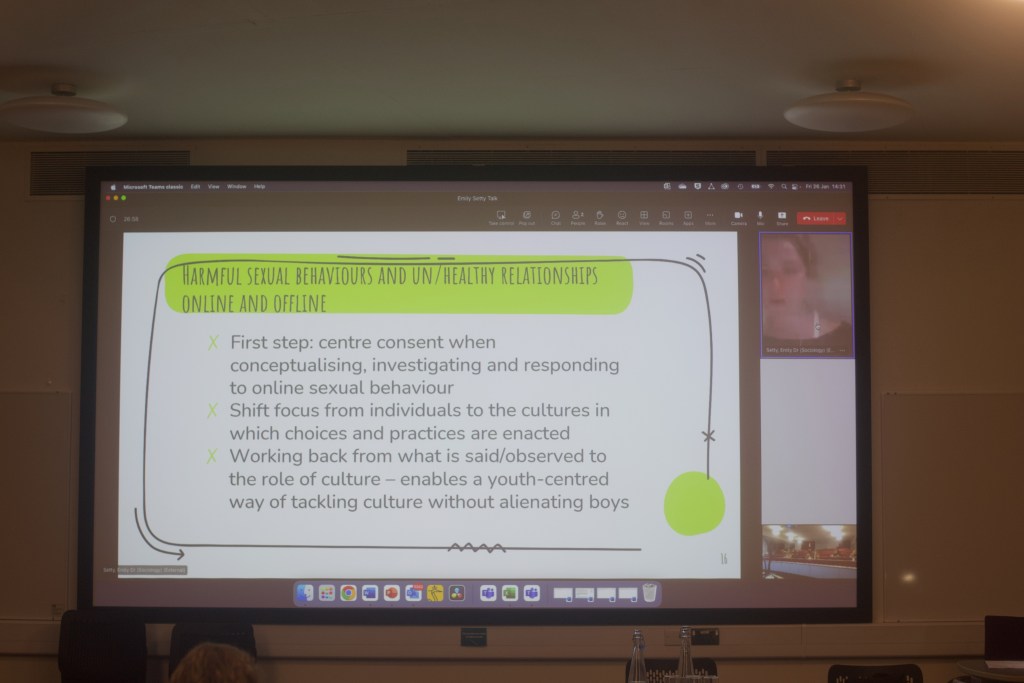
In terms of implications, Dr Setty argued for a culturally informed approach to consent education, moving beyond a legalistic perspective. The importance of fostering critical consciousness among adolescents is underscored, encouraging them to question and understand the culture that shapes their attitudes and behaviours. This approach aims to tackle issues of gender-based violence online, recognizing the complexities that both girls and boys face in the evolving landscape of relationships, ultimately aiming for better emotional literacy and improved relationship quality for boys.
During the Q&A, the focus was on strategies for engaging boys in discussions about sensitive topics like sexual behaviours. Dr Setty emphasized active listening and understanding, creating a space for boys to share their views without immediate judgment. She redirected their perspectives, suggesting alternative viewpoints and encouraging positive visions of relationships while challenging traditional masculinity norms. Lastly, a question explored how boys adopt certain narratives influenced by online forums. It highlighted the role of online spaces in shaping perceptions and the need for nuanced education challenging binary narratives about consent.
Blog author: Sitian Chen
 Feminist Educational Engagement Lab